
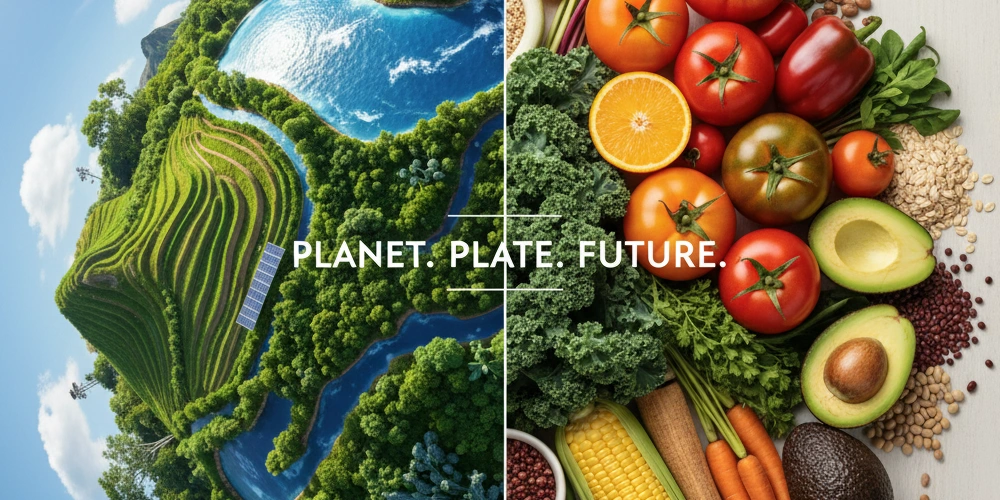
Going vegetarian brings benefits that reach past personal health. A shift toward a vegetarian diet can improve the environment drastically. This article intends to shed light on the environmental improvements and other gains that arise from abstaining from meat.
Environmental Impact of Meat Production
Meat production heavily impacts the environment. It uses vast resources, including land, water, and food, for animal farming. The Smithsonian Institute estimates that seven football fields’ worth of land gets deforested every minute to make room for farmland, largely due to livestock farming.
Moreover, this process contributes significantly to greenhouse gases emission. Livestock farming accounts for 14.5% of all human-induced emissions, according to the Food and Agriculture Organization.
Save Water by Going Vegetarian
Water is crucial for the production of food, particularly meat. Large quantities of water go into raising animals for slaughter. For instance, producing one pound of beef requires over 1800 gallons of water, while a pound of vegetables uses only 39 gallons, as per the Water Footprint Network. By going vegetarian, you reduce this water burden on the planet.
Preserve Land with Vegetarianism
Land usage is another factor to consider. Grazing and farming animals for meat consumption takes up a vast expanse of land, a significant portion of which could be reclaimed for wildlife or growing crops if the demand for meat drops. The land resource used for animal farming far outweighs the land required to grow equivalent amounts of vegetables, fruits, or grains.
Combat Global Warming by Ditching Meat
By choosing a vegetarian diet, you can contribute to the fight against global warming. As previously stated, livestock farming releases significant amounts of greenhouse gases. Specifically, the production of lamb, beef, and cheese generates more greenhouse gases than vegetables and cereals. Less demand for these foods decreases the emission of these gases.
Health Benefits of Going Vegetarian
A vegetarian diet also offers personal health benefits. As confirmed by the Australian Institute of Health and Welfare, a diet rich in fruits, vegetables, and grains is associated with a lower risk of developing conditions like obesity, type 2 diabetes, and heart disease.
Final Thoughts
In conclusion, adopting a vegetarian diet plays a crucial role in preserving the planet. By reducing the demand for meat, we can lower deforestation, decrease water use, conserve land, and lower greenhouse gas emissions. This shift also aligns with a healthier lifestyle.
However, it’s important to recognize that sudden or wrong dietary changes can have unintended health consequences. Vegetarian diets need to be well-balanced and nutritious to ensure you aren’t missing out on essential nutrients.
By going vegetarian, you contribute to the sustainability of the Earth. Your choice has the potential to bring about significant environmental and health benefits. You can take a stand for the environment, just by what you put on your plate.